
Environmental responsibility is no longer just a regulatory requirement-it has become a key factor in building trust, improving operational efficiency, and achieving long-term business growth. Organizations across industries are increasingly adopting internationally recognized environmental management standards to reduce their environmental impact and demonstrate their commitment to sustainability.
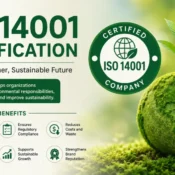
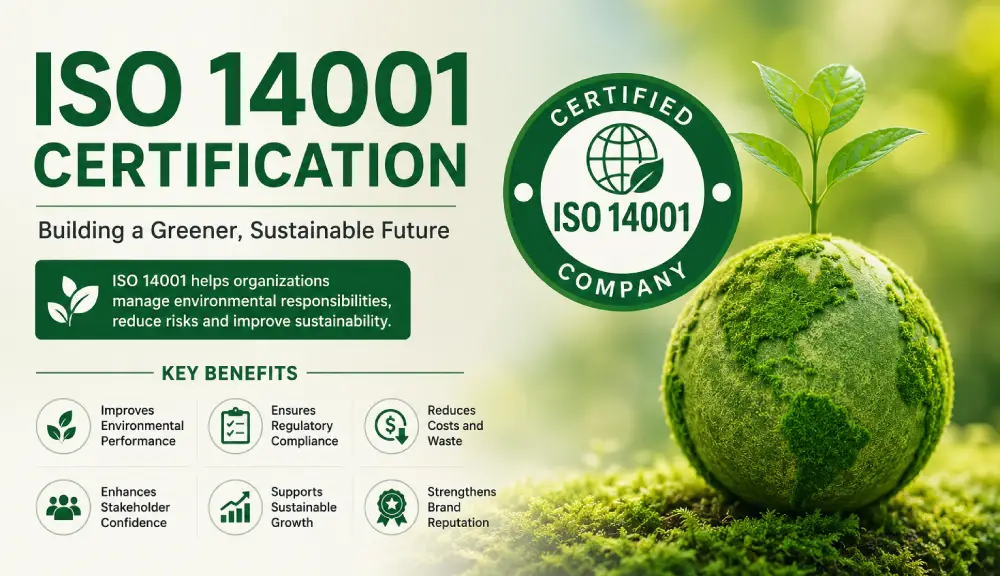
One of the most widely accepted standards for environmental management is ISO 14001 Certification. It helps organizations establish a structured Environmental Management System (EMS) that improves environmental performance, ensures regulatory compliance, and supports sustainable business practices.
What is ISO 14001 Certification?
ISO 14001 is an international standard developed by the International Organization for Standardization (ISO) for Environmental Management Systems (EMS). It provides a framework that helps organizations identify, monitor, manage, and reduce their environmental impact.
The standard can be implemented by businesses of all sizes and industries, including manufacturing, construction, healthcare, logistics, information technology, and service-based organizations.
ISO 14001 certification demonstrates that an organization has implemented effective processes to manage environmental responsibilities and continuously improve environmental performance.
Why is ISO 14001 Important?
Environmental regulations are becoming stricter across the world. Customers, investors, and stakeholders also prefer organizations that actively work toward sustainability.
ISO 14001 helps organizations:
- Reduce environmental risks
- Improve resource efficiency
- Minimize waste generation
- Ensure compliance with environmental regulations
- Enhance corporate reputation
- Improve stakeholder confidence
- Support long-term sustainability goals
Organizations that implement ISO 14001 often experience operational improvements while reducing environmental costs.
Key Principles of ISO 14001
The ISO 14001 framework is based on continuous improvement and environmental responsibility.
Environmental Policy
Organizations must establish a clear environmental policy that reflects their commitment to environmental protection and compliance.
Planning
The organization identifies environmental aspects, legal obligations, risks, opportunities, and objectives for improvement.
Implementation and Operation
Processes, resources, responsibilities, and controls are established to achieve environmental objectives.
Performance Evaluation
Regular monitoring, measurement, audits, and reviews help evaluate environmental performance.
Continuous Improvement
Organizations continuously improve their EMS to achieve better environmental outcomes over time.
Benefits of ISO 14001 Certification
Improved Environmental Performance
ISO 14001 enables organizations to systematically identify and reduce activities that negatively impact the environment.
Regulatory Compliance
The standard helps businesses stay updated with environmental laws and regulations, reducing the risk of penalties and legal issues.
Cost Savings
By reducing waste, energy consumption, and resource usage, organizations can achieve significant operational savings.
Enhanced Brand Reputation
Customers and stakeholders increasingly value organizations that prioritize sustainability and environmental responsibility.
Better Risk Management
ISO 14001 helps organizations proactively identify environmental risks and implement preventive measures.
Competitive Advantage
Many government projects, multinational corporations, and procurement processes prefer or require ISO-certified suppliers.
Who Should Obtain ISO 14001 Certification?
ISO 14001 is suitable for:
- Manufacturing companies
- Construction firms
- Infrastructure companies
- Logistics and transportation providers
- Educational institutions
- Healthcare organizations
- Service providers
- Government organizations
- Small and medium enterprises (SMEs)
Any organization seeking to improve environmental performance and demonstrate sustainability commitment can benefit from ISO 14001 certification.
ISO 14001 Certification Process
Step 1: Gap Analysis
Assess the organization’s current environmental management practices and identify areas requiring improvement.
Step 2: EMS Development
Develop and implement an Environmental Management System aligned with ISO 14001 requirements.
Step 3: Documentation
Prepare environmental policies, procedures, records, objectives, and compliance documentation.
Step 4: Employee Training
Train employees on environmental responsibilities and EMS requirements.
Step 5: Internal Audit
Conduct internal audits to evaluate compliance and identify improvement opportunities.
Step 6: Management Review
Senior management reviews the effectiveness of the EMS before certification.
Step 7: Certification Audit
An accredited certification body conducts an external audit to verify compliance with ISO 14001 requirements.
How QMatrix Helps Organizations Achieve ISO 14001 Certification
Implementing ISO 14001 requires expertise, planning, documentation, training, and audit preparation. QMatrix supports organizations throughout the certification journey by providing professional consulting services tailored to industry-specific requirements.
Our experts help organizations:
- Conduct gap assessments
- Develop Environmental Management Systems
- Prepare documentation
- Train employees
- Perform internal audits
- Ensure certification readiness
- Support continuous improvement initiatives
With a structured approach and industry expertise, QMatrix helps organizations achieve ISO 14001 certification efficiently and effectively.
Conclusion
ISO 14001 Certification is more than a compliance requirement-it is a strategic investment in environmental responsibility, operational efficiency, and sustainable growth. Organizations that implement an effective Environmental Management System can reduce environmental impact, improve stakeholder trust, and strengthen their market position.
As sustainability continues to shape business decisions worldwide, ISO 14001 provides a proven framework for organizations committed to environmental excellence.
Frequently Asked Questions (FAQs)
1. What is the purpose of ISO 14001 certification?
ISO 14001 helps organizations establish an Environmental Management System (EMS) to manage environmental responsibilities, improve sustainability, and comply with regulations.
2. Is ISO 14001 certification mandatory?
No, ISO 14001 certification is voluntary. However, many organizations pursue certification to improve environmental performance, meet customer requirements, and gain a competitive advantage.
3. How long does it take to get ISO 14001 certified?
The timeline depends on the organization’s size, complexity, and existing processes. Most organizations complete implementation and certification within a few months.
4. Which industries can apply for ISO 14001 certification?
ISO 14001 can be implemented by organizations across all industries, including manufacturing, construction, healthcare, logistics, education, and service sectors.
5. What are the main benefits of ISO 14001 certification?
Key benefits include improved environmental performance, regulatory compliance, cost savings, risk reduction, enhanced reputation, and better business opportunities.