
Let’s be honest – most businesses don’t think about workplace safety until something goes wrong. A near-miss, a worker injury, a regulatory notice. And by then, it’s already too late to be proactive.
ISO 45001 exists to flip that script. It’s a globally recognized standard that helps organizations build a real system for occupational health and safety – one that spots risks before they become incidents, not after.
At Q Matrix Consultancy Services, we’ve helped businesses across India implement ISO 45001:2018 for over 14 years. This guide covers what you actually need to know – without the fluff.
What is ISO 45001 Certification?
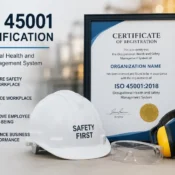
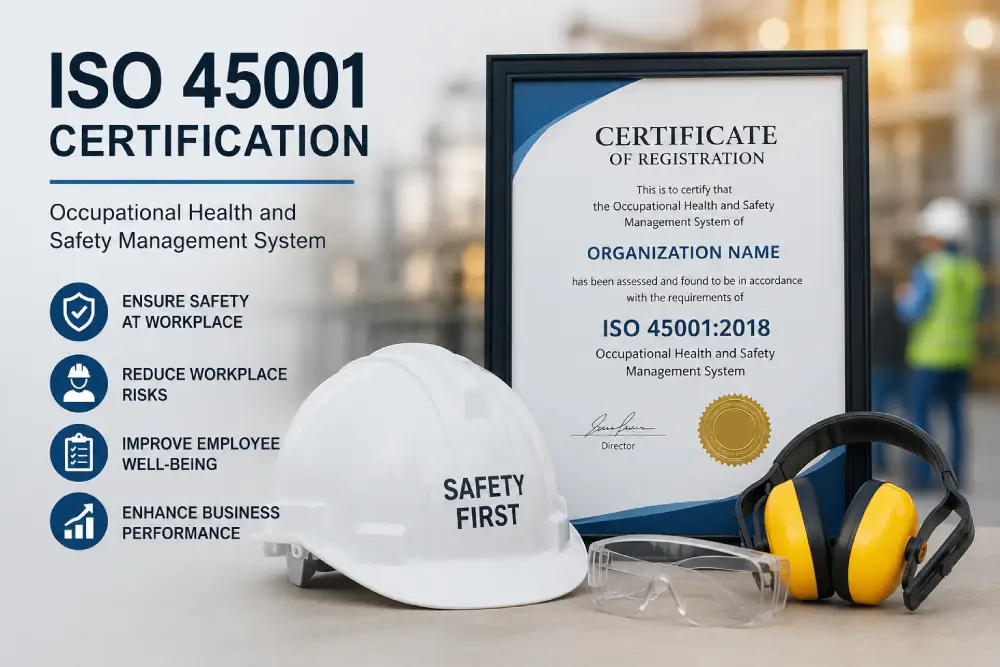
ISO 45001:2018 is the international standard for Occupational Health and Safety Management Systems (OH&SMS). It replaced the older OHSAS 18001 in 2018 and set a much higher bar for how organizations manage workplace safety.
In simple terms, it gives your business a structured way to:
- Identify hazards and control risks before anyone gets hurt
- Meet legal requirements under Indian occupational safety laws
- Set measurable safety goals and track them over time
- Involve workers – not just management – in safety decisions
- Continuously improve your safety performance, year over year
ISO 45001 works for any organization – a 10-person workshop or a 5,000-employee factory.
The requirements scale to the size and nature of your operations.
Why Does ISO 45001 Matter for Your Business?
This isn’t just about checking a compliance box. Here’s the practical case:
You stay legally protected
India’s workplace safety regulations – including the Factories Act and the Occupational Safety, Health and Working Conditions Code 2020 – are being enforced more seriously than before. ISO 45001 builds compliance into everyday operations, so you’re not scrambling when an inspector shows up.
You win more business
Many government tenders, export contracts, and large corporate supply chains now require ISO 45001 as a minimum criteria. Without it, you simply don’t get shortlisted.
You reduce real costs
Workplace accidents aren’t just tragic – they’re expensive. Medical costs, lost workdays, legal claims, insurance hikes. Organizations with ISO 45001 consistently report fewer incidents and lower associated costs.
Your people trust you more
Workers who feel genuinely safe are more engaged and less likely to leave. In sectors where skilled labor is hard to find, that matters more than people realize.
Core Requirements of ISO 45001:2018 – Simply Explained
The standard is organized around seven key areas:
- Context – Understand what internal and external factors affect your safety performance
- Leadership – Top management must actively lead OH&S, not just delegate it
- Planning – Identify hazards, assess risks, and set clear safety objectives
- Support – Train people, communicate clearly, and maintain proper documentation
- Operation – Control daily processes, manage contractors, and prepare for emergencies
- Performance Evaluation – Run internal audits, review KPIs, hold management reviews
- Improvement – Investigate incidents, take corrective action, and keep getting better
The good news: ISO 45001 uses the same framework as ISO 9001 and ISO 14001. If you already have either of those, integration is much simpler.
The ISO 45001 Certification Process – Step by Step
Here’s exactly how Q Matrix takes you from where you are to certified:
- Gap Analysis – We assess what you have vs. what ISO 45001 requires
- Documentation – Safety policy, hazard registers, emergency procedures, all tailored to your operations
- Implementation – We work with your team on the ground, not just on paper
- Internal Audit – We find and fix any gaps before the certification body visits
- Certification Audit – Third-party audit by an accredited body. Pass = certificate issued
- Surveillance – Annual audits to maintain certification. We support these too
Timeline: Most SMEs get certified in 2–4 months.
Larger or high-risk organizations may take 4–6 months.
Which Industries Need ISO 45001?
While any business can benefit, these sectors see the biggest impact:
- Manufacturing – Machinery, chemical, fire, and ergonomic hazards
- Construction – Fall risks, heavy equipment, contractor coordination
- Pharmaceuticals – Chemical handling, cleanroom safety, regulatory compliance
- Oil, Gas & Energy – High-consequence risks, confined spaces, toxic exposures
- Automotive – OEM supplier safety requirements, production floor risks
- Transport & Logistics – Driver safety, warehouse hazards, loading risks
- Healthcare – Biological hazards, sharps, patient handling risks
- Engineering & Railways – Heavy equipment, structural risks, high-voltage environments
Q Matrix has guided organizations across all of these sectors – and across every Indian state.
Why Choose Q Matrix for ISO 45001?
- 14+ years of ISO certification experience across India
- Pan-India reach – we work with clients in all states
- End-to-end support: gap analysis to certification and beyond
- Integrated approach – combine ISO 45001 with ISO 9001 and ISO 14001 in one system
- Cost-effective – project completed within your budget and timeline
- 100% customer satisfaction track record
Frequently Asked Questions
Q1. What’s the difference between ISO 45001 and OHSAS 18001?
OHSAS 18001 is no longer valid – it was withdrawn in 2021. ISO 45001:2018 is the current global standard. It’s more proactive, requires stronger leadership involvement, and mandates genuine worker participation. If you were on OHSAS 18001, you need to transition to ISO 45001.
Q2. How long does ISO 45001 certification take?
For most small and mid-sized businesses, the process takes 2 to 4 months from gap analysis to certificate. Larger or high-risk organizations may need 4 to 6 months. Q Matrix works efficiently to keep you on schedule.
Q3. Is ISO 45001 mandatory in India?
It’s not legally mandatory for most businesses – but it’s increasingly required in practice. Government tenders, international supply chains, and large corporate buyers commonly ask for it. In high-risk industries, it may also be expected by regulators and insurers.
Q4. Can a small business get ISO 45001 certified?
Yes, absolutely. ISO 45001 is designed for organizations of any size. The requirements are proportional to the scale and complexity of your operations. Q Matrix has helped many SMEs across India get certified affordably and without unnecessary complexity.
Q5. Can ISO 45001 be combined with ISO 9001 or ISO 14001?
Yes – and it’s highly recommended. All three standards share the same framework structure, so they integrate cleanly into one Integrated Management System (IMS). This means one set of policies, one set of audits, and significantly lower overall costs. Q Matrix specializes in building integrated systems.
Ready to Get Certified?
ISO 45001 isn’t about paperwork. It’s about building a workplace where people go home safe – every single day. And for your business, it’s also about winning contracts, reducing costs, and proving that safety is something you actually mean. Q Matrix makes the certification process straightforward, affordable, and genuinely useful – not just a box-ticking exercise.
📞 +91 9903557365 📧 info@qmatrix.in